We Can Bear It, Together
Sport in this country is religion.
So it makes sense that our love of sport shows up in life’s toughest moments.
In 10 years as an Interfaith Minister working in death care, I've witnessed every aspect of a funeral ceremony brought to life through someone's beloved sporting team.
The funeral dress code is the colours of their favourite club.
Coffins wrapped in team stickers and logos.
Scarves draped over memorial tables.
Flowers chosen in blue and white for a lifelong Bulldogs supporter.
A team song sung by a room full of people who might not have sung anything together in years.
Because sport is rarely just sport.
It is identity.
It is belonging.
It is memory.
It is family.
It is culture.
It is the place where we have stood shoulder to shoulder with strangers and screamed ourselves hoarse. It is where we have experienced the exquisite highs and crushing lows of being part of something bigger than ourselves. And sometimes, when life breaks our hearts, that sense of belonging becomes something we can lean on.
So when I watched what has unfolded around Jai Arrow these past few months, I recognised it immediately.
Not as sport - but as ceremony.
What we have witnessed around South Sydney Rabbitohs player Jai Arrow following his diagnosis with Motor Neurone Disease has, for me, been one of the most moving examples of our sporting culture at its very best. And I think it’s important to hold that alongside the uncomfortable and deeply serious conversations we are having about men, masculinity, violence against women and the culture of professional sport. These things can exist alongside one another. The problems within men’s sport don’t disappear because of a beautiful moment of collective care. But neither should they prevent us from recognising the moments when sport shows us something profoundly human: the capacity to rally around one another, to put rivalry aside, to make space for grief, and to remind someone that they do not have to face something devastating alone.
Jai’s 100 Game Milestone
Jai was forced into early retirement in May this year, after a decade in the NRL and 178 first-grade games. He had played 98 games for the Rabbitohs - just two short of the club’s coveted 100-game milestone.
Ordinarily, that might simply have been where the story ended.
But the Rabbitohs, together with the NRL and Rugby League Players’ Association, found a way for Jai to reach that milestone. They made space for him to return to the field for the final two games of the regular season.
Not to play in the traditional sense.
But to put the jersey back on.
To walk out with his mates.
To stand on the field in the colours of the club he had given so much to.
To hear the whistle.
To be counted.
To become a 100-game Rabbitoh.
And there is something about this that moves me deeply.
Because it is ceremony.
Not ceremony in the formal sense. Not something scripted in a chapel. But ceremony in the most ancient sense of the word: a community coming together to mark something that matters.
To say:
We see you.
We know this matters.
You matter.
And you don't have to do this alone.
That, to me, is what all ceremony is.
It is how human beings have always responded to the moments that are too significant to simply pass by. We gather at births. We gather at marriages. We gather at deaths. We gather when someone leaves, when someone arrives, when something ends, when something begins.
We gather when life changes shape.
And we don't gather because being together can change what has happened. We gather because being together changes how we experience it. This is what community is for - and this is what community can do.
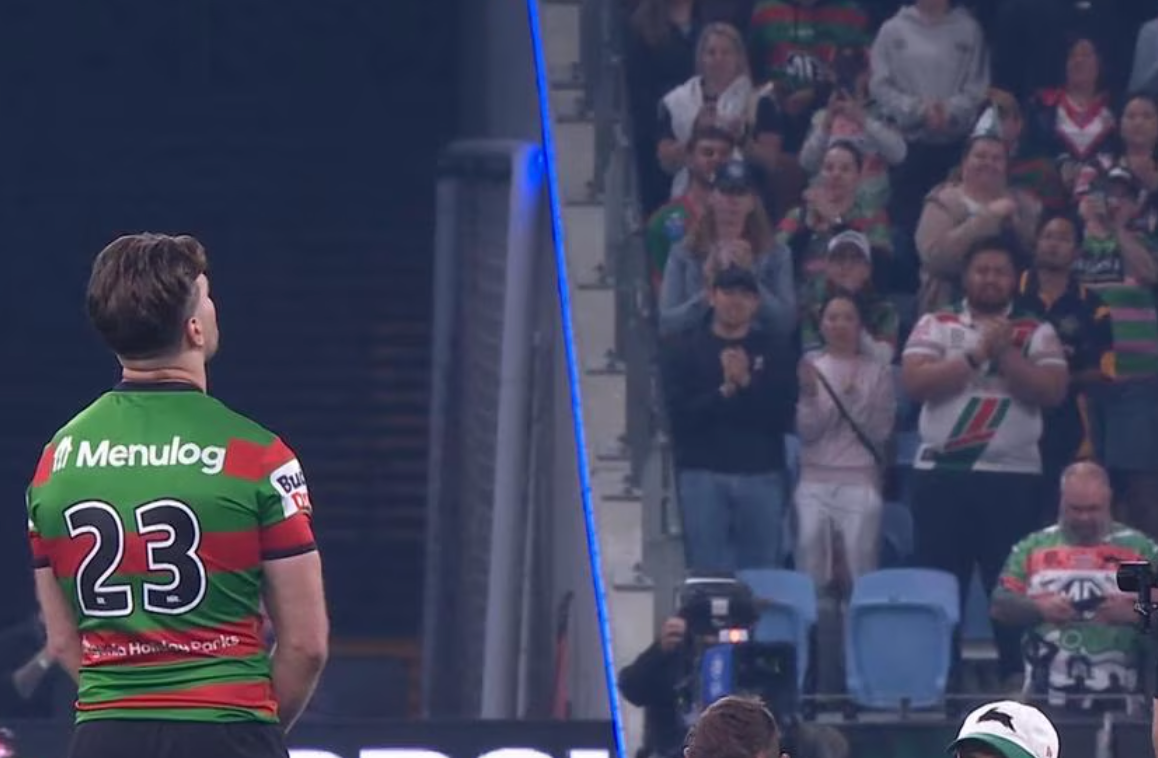
When Jai walked onto the field in that South Sydney jersey, there was a sense that something much bigger than a football game was happening. The whistle blew. His game was officially clocked. And then he was substituted off. There was deep, extraordinary emotion. Jai sobbed. And the thing that struck me wasn't simply that he was crying. It was that nobody seemed to want to look away.
There was no awkwardness around the emotion. No attempt to tidy it up. No forced positivity. No chin up, mate. No need to find the right words to make this somehow okay. Just people witnessing someone they love standing in the middle of something utterly heartbreaking. And crying with him.
We are so often uncomfortable with grief.
We want to make it better.
We reach for the right words.
We tell people to stay strong.
We look for the silver lining.
We say at least...
But sometimes there is no silver lining. Sometimes something is just utterly devastatingly heartbreaking.
And what we need most is not an answer.
We need someone to sit beside us in the unbearable truth of it.
I'm here.
We're here.
Together.
That is what I have been watching unfold around Jai with such tenderness and a quiet sense of awe.
The Rabbitohs haven't tried to make Jai's diagnosis less devastating. They haven't pretended that MND isn't cruel. They haven't tried to manufacture a happy ending. Instead, they've gathered around him and invited the wider community be a part of that belonging.
They've made room for the grief, while also finding ways to celebrate the life and accomplishments that is happening right now.
The giant Thank You Jai banners.
The guard of honour.
The standing ovations.
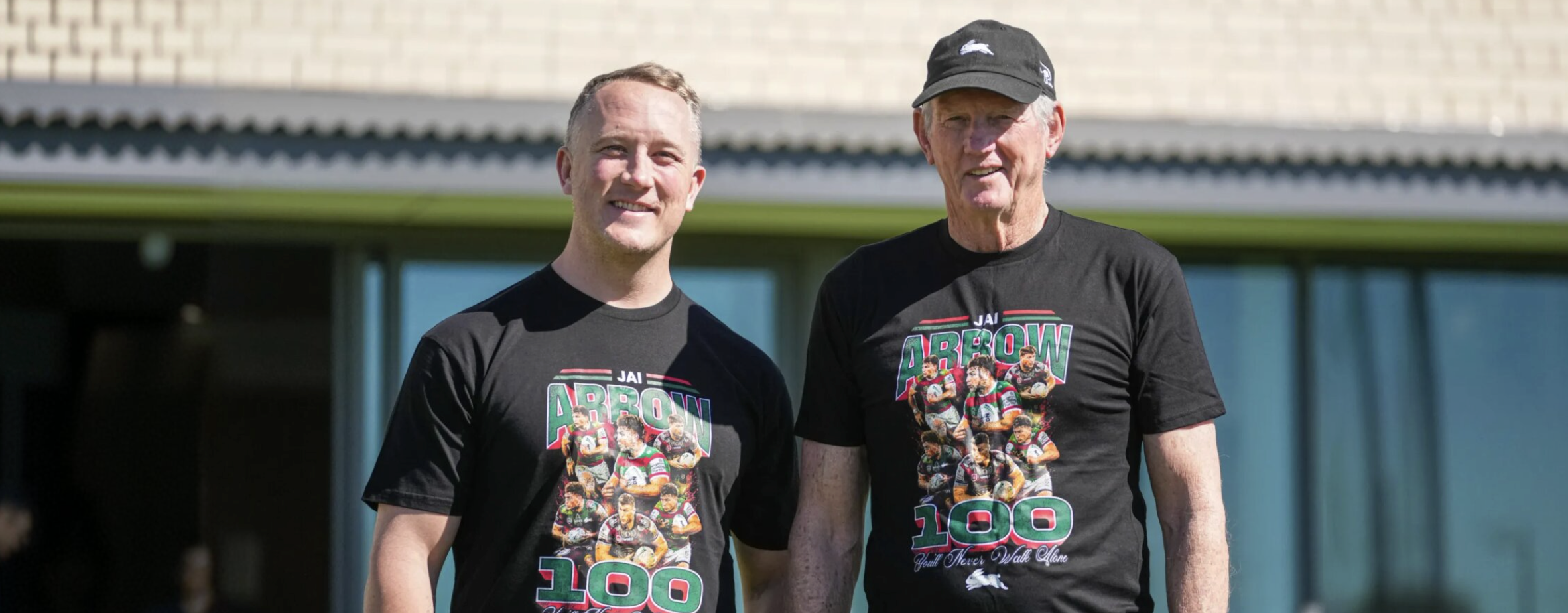
The limited-edition shirts celebrating his 100th game.
His teammates speaking openly about what he means to them.
The decision to let him take the field again.
And perhaps one of the most beautiful images of all, Wayne Bennett, one of the most celebrated coaches in rugby league history, stepping down from the coaching box and taking his place holding the interchange card as Jai walked from the field for the last time. Beaming and unflinching, embracing Jai and holding him as he sobbed.
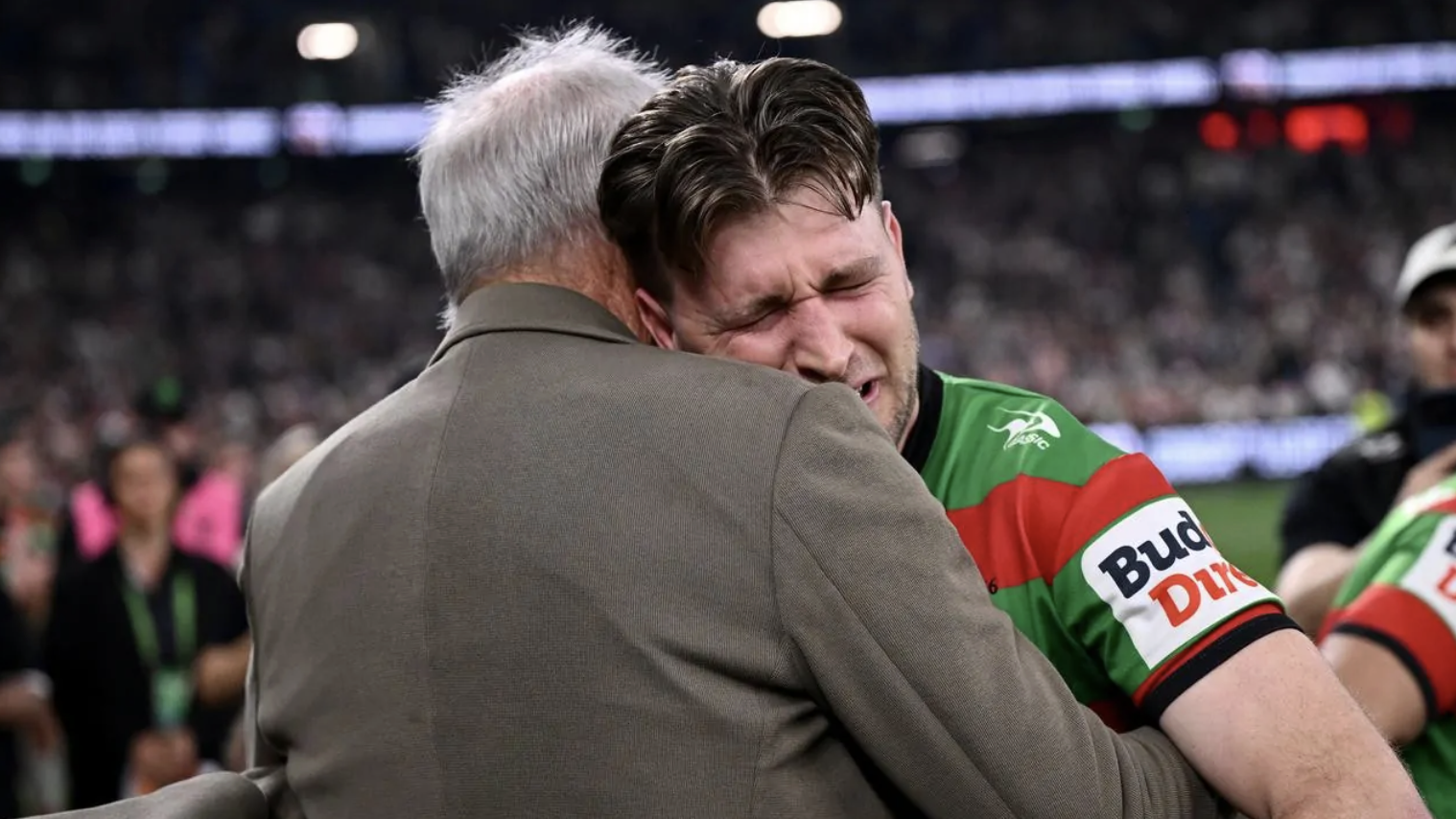
(Dan Himbrechts/AAP PHOTOS) Credit: AAP
Sport gives us a language for belonging
I think this is one of the great gifts of sport. It gives us a language for belonging. You don't have to know everyone in the stadium. You don't have to agree with them about anything else. You don't even have to know their names. But when the team runs onto the field, thousands of people stand together. They sing together. They celebrate together. They grieve together. They hold their breath together. They roar together. For a few hours, the boundaries between me and you become a little softer.
We become us.
And when something devastating happens to one person within that community, the collective can become an extraordinary container for grief. We've seen this before in the ways sporting communities respond to tragedy. But what has unfolded around Jai feels particularly profound because there is no sporting victory that can fix this. There is no grand final to win.
No comeback story we can manufacture.
No scoreline that makes the diagnosis disappear.
There is simply the reality of a young man living with a terminal illness, and a whole community saying: We're with you.
Ceremony matters because life is too big to carry alone
This philosophy is at the heart of my work.
I work with people at some of the most significant thresholds of their lives. Birth. Marriage. Death. Divorce. Transition. Terminal diagnosis. The moments when the old shape of life no longer fits and we need some way to acknowledge that something has deeply changed. Ceremony gives us that container. It takes what is happening internally and makes it visible.
It gives us a moment to stop.
To gather.
To witness.
To say the thing that needs saying.
And perhaps most importantly, it reminds us that we are not alone.
Grief can be isolating. But human beings are hardwired for connection. We need other people. We need witnesses. We need community. We need somewhere to put our love when there is nowhere to put the pain.
Sometimes ceremony is simply the act of creating that somewhere.
This is why I have also been thinking about Jai alongside another story from this year, the beautiful living wake of Australian broadcaster and musician James Valentine. After receiving a terminal cancer diagnosis, James decided he didn't want to wait until after his death to hear what people loved about him. So he gathered his people together while he was still alive. There was music. There was laughter. There were speeches. There was music. There was celebration. There was grief. And there was James himself, right there in the middle of it, able to hear the words and speak his own.
Living Wakes are such a powerful gathering because it turns so many of our assumptions about grief upside down. We tend to think ceremony belongs at the end. After someone has died. But ceremony can also help us meet life while it is happening.
It can help us say: This is where we are. This is who we are. This is what matters. And we are going to be here for it, together.
Turning towards the truth
I think that is what all of this is really about.
Turning towards the truth. Not away from it.
Not dressing it up. Not pretending we can make the unbearable bearable by finding the perfect words. But turning towards the extraordinary, heartbreaking, beautiful truth that life is finite. That we are all, in different ways, living with impermanence. And sometimes life is wildly unfair.
A young man can be at the height of his sporting career and suddenly receive a diagnosis that changes everything. A family can be told that someone they love is going to die from a disease with no cure. And there is no neat lesson in that.
But there is something we can do.
We can gather.
We can witness.
We can celebrate.
We can cry.
We can sing.
We can put our arms around each other.
We can wear the jersey.
We can carry the banner.
We can hold the interchange card.
We can show up.
We can stand beside each other in the middle of the heartbreak.
And for everyone living with MND, terminal illness, serious illness, or any of the many forms of grief that can make the world feel suddenly smaller, there is something to watch and learn from what is happening around Jai Arrow.
We cannot always change the circumstances.
But we can change how we meet them.
Maybe, when life asks more of us than any one person should have to carry alone, this is what community is for.
Because to bear something doesn't necessarily mean carrying it by yourself.
Maybe it means allowing other people to put their hands underneath it too.
I'll carry some.
You carry some.
We'll carry some together.
Whatever comes, we can bear it.
Together.