THE FAMILY GUIDE TO DISCUSSING DEATH
We Never Talked About It
A warm, gentle, completely human guide to having the conversation your family keeps avoiding
There's a sentence I hear more than almost any other in my work.
It comes in the days after someone dies, when there's a mountain of decisions to make and no map for any of them. When family members are looking at each other across a kitchen table, waiting for someone to know the answer. When the question "what would they have wanted?" hangs in the air and nobody can answer it with any certainty.
Someone will look up and say it.
"We never talked about it."
And it carries so much weight. The not-knowing. The wishing. The guessing at what they would have wanted and hoping you got it right.
Why We Don't Talk About It (A Very Relatable List)
Let me guess what's stopping you...
It feels too morbid.
Nobody wants to be the one who brings it up.
You don't want to upset anyone.
There's never a right moment.
You keep meaning to and then life just... continues at its usual pace and somehow death keeps getting bumped down the agenda.
Maybe you're the adult child watching your parent get older and every time you try to find the words, you lose them.
Maybe you're the ageing parent who has actually thought about this quite a lot, and you'd welcome the conversation if only someone would start it.
Maybe you're in a long-term relationship where you both silently agree not to go there because it feels heavy and you'd rather watch Netflix.
All of this is completely normal - and - the conversation is easier to start than you think. Here’s some helpful conversations starters for you to try…

For the Adult Whose Parent Won't Go There
Your parent might shut it down. They might say "don't be morbid" or change the subject or suddenly become very interested in what's happening in the garden. That's okay. You've planted a seed.
A few approaches that tend to work:
"I read this thing about how families who talk about this stuff in advance find it so much easier when the time comes. I'd love to know what matters to you."
That's not morbid. That's love in practical clothing.
Or go in through the side door:
"If you could choose your own funeral, what would it look like?"
You might be surprised. Lots of people have opinions about this. Strong ones. Your job is just to ask and then listen.
And if they still won't engage?
Try:
"I'm not asking because I think anything is going to happen soon. I'm asking because I love you and I want to get it right when the time comes."
Something like that usually lands.

For the Ageing Parent Whose Children Won't Go There
You might have thought about your death more than your family realises. You might actually feel ready to talk about it. And every time you try, your kids get uncomfortable and steer you towards topics like the weather and grandchildren.
Here's what I'd suggest.
Make it concrete and calm. Not "I want to talk about when I die" (may be too confronting) but rather: "I've been thinking about what I'd like at the end of my life and I'd like to tell you. Not because anything is wrong, just because I'd like you to know."
Write it down if the conversation feels too hard. A letter. A document. An email. Something that says: here's what I'd want, here's where to find the important papers, here's what matters to me. You don't need anyone to receive it well. You just need it to exist.
And if you want to open the door gently? Start with something specific and even a bit fun. Tell them what song you want at your funeral. Tell them you don't want a fuss, or that you do want a fuss, or that you'd like good wine and nobody in black. Specifics invite response. Specifics start conversations.

For Partners Who Don't Know How to Bring It Up
In long-term relationships, this one is particularly common. You've built a life together and somehow the admin of dying feels like it could puncture something. So you both silently agree not to.
Try this reframe: talking about death isn't the opposite of love. It's an extension of it.
You talk about what you want for your future. Where you'd like to live, how you'd like to spend your time, what matters to you. The end of life is part of that conversation. It's not separate from love - it's woven into it.
A low-stakes way to begin:
"I've been thinking - if something happened to me, I'd want you to know a few things. Can I tell you?"
Or even simpler: start with what you'd want for them. "If you died before me, I'd want to know that you were okay. I'd want to know your wishes. Can we talk about that?"
Most people, given a gentle invitation, are relieved to talk.
Real Conversation Starters You Can Use Today
Don't have the vocabulary yet? Borrow some of mine.
Blame me. Genuinely, please do. "I follow this death care lady online and she said we should all know each other's wishes. So, what would you want?" Door open. You're welcome.
Start with something fun. "What song do you want at your funeral?" Watch your family reveal everything about themselves. Someone will say something unexpected. Someone will argue about it. Someone will turn out to have very strong feelings about this. Perfect. You're already in it.
Make it about love. "I want to make things easier for you one day. So I'd love you to know what matters to me - and I'd love to know what matters to you." An invitation rather than a confrontation.
Go first. Share something small. One thing you'd want. A particular piece of music. A type of ceremony. A preference about what happens to your body. Whether you want a big gathering or something quiet. "I know this might seem random but I've been thinking - I'd really like to be buried, not cremated. Just so you know." When you go first, other people soften. Your honesty becomes permission for theirs.
Name the awkward. "This feels a bit weird to bring up. But I care about you and I'd rather we talked about it now than wished we had later." Simple. True. Effective.
You Don't Need All the Answers
This isn't about completing a checklist. You don't need to resolve every question in one sitting. You don't need to know everything.
You just need to open the door.
Even one conversation. Even one thing known. Even one small preference shared.
That is a gift. I have watched families navigate the hardest weeks of their lives and I can tell you - the ones who knew, even a little, were so grateful. Not because it made grief easy. Nothing does. But because they didn't have to guess. Because they had something to hold onto.
You have time to do this gently. Start small. Start today.
What decisions are there to make?
More than most people realise, and they all arrive at once…
Burial or cremation? Aquamation or terramation?
A ‘traditional’ funeral or something else?
Religious, spiritual or secular?
A big gathering or something small and private?
Supported by a particular local Funeral Director?
What type of coffin - cardboard, wicker, MDF or solid timber?
Shrouded cremation or coffined cremation?
What to dress them in - something special, something ordinary, something they loved, birthday suit?
Which flowers to include? or avoid?
Hearse options - traditional or vintage? Classy black or bright leopard print (yes it exists.)
If cremated, where should the ashes go?
Is there money put aside anywhere for the funeral?
Is there an existing burial plot in the family? Which cemetery?
What music feels right for their ceremony?
None of these questions are unanswerable. But they're a lot harder to answer in grief, under time pressure, with a family who all have different ideas and nobody has any certainty.
One conversation changes that.
GOING DEEPER: FUNERALS REIMAGINED
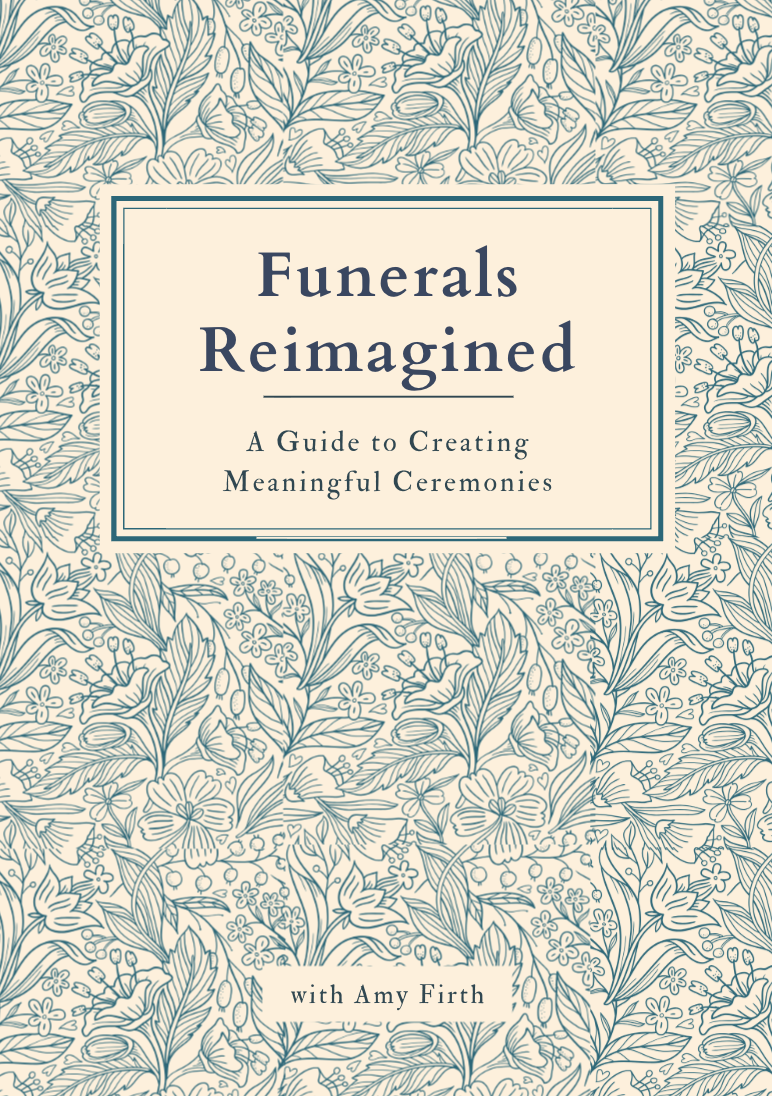
If reading this has got you thinking - about what you'd want, what you'd change, what's even possible - I've put together something just for you.
Funerals Reimagined is a guide for anyone who wants a funeral that actually feels like the person. One that's meaningful, personal and truly theirs.
