A FREE GUIDE FOR PARENTS, CARERS AND GRANDPARENTS
How to Talk to Children About Death
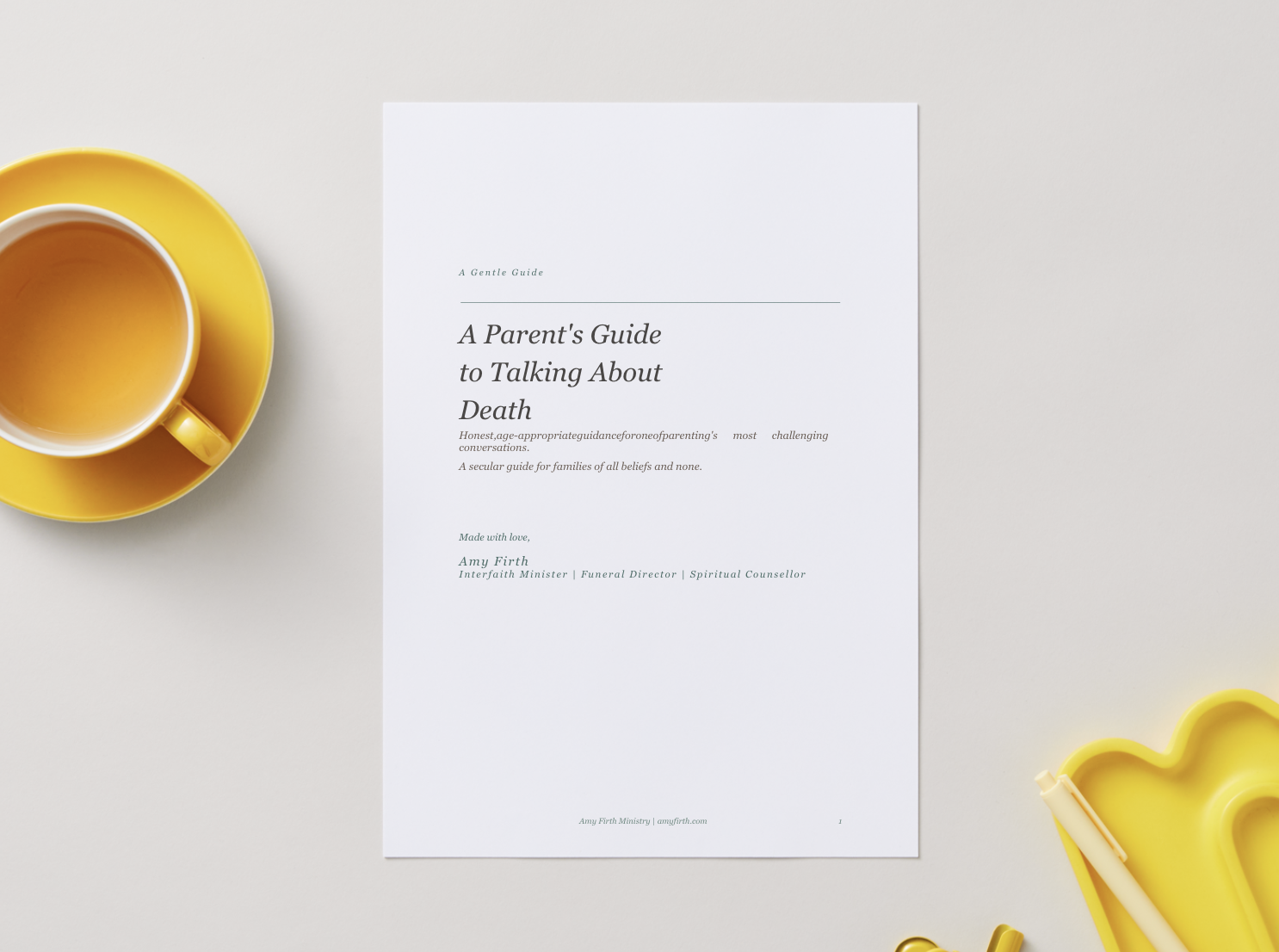
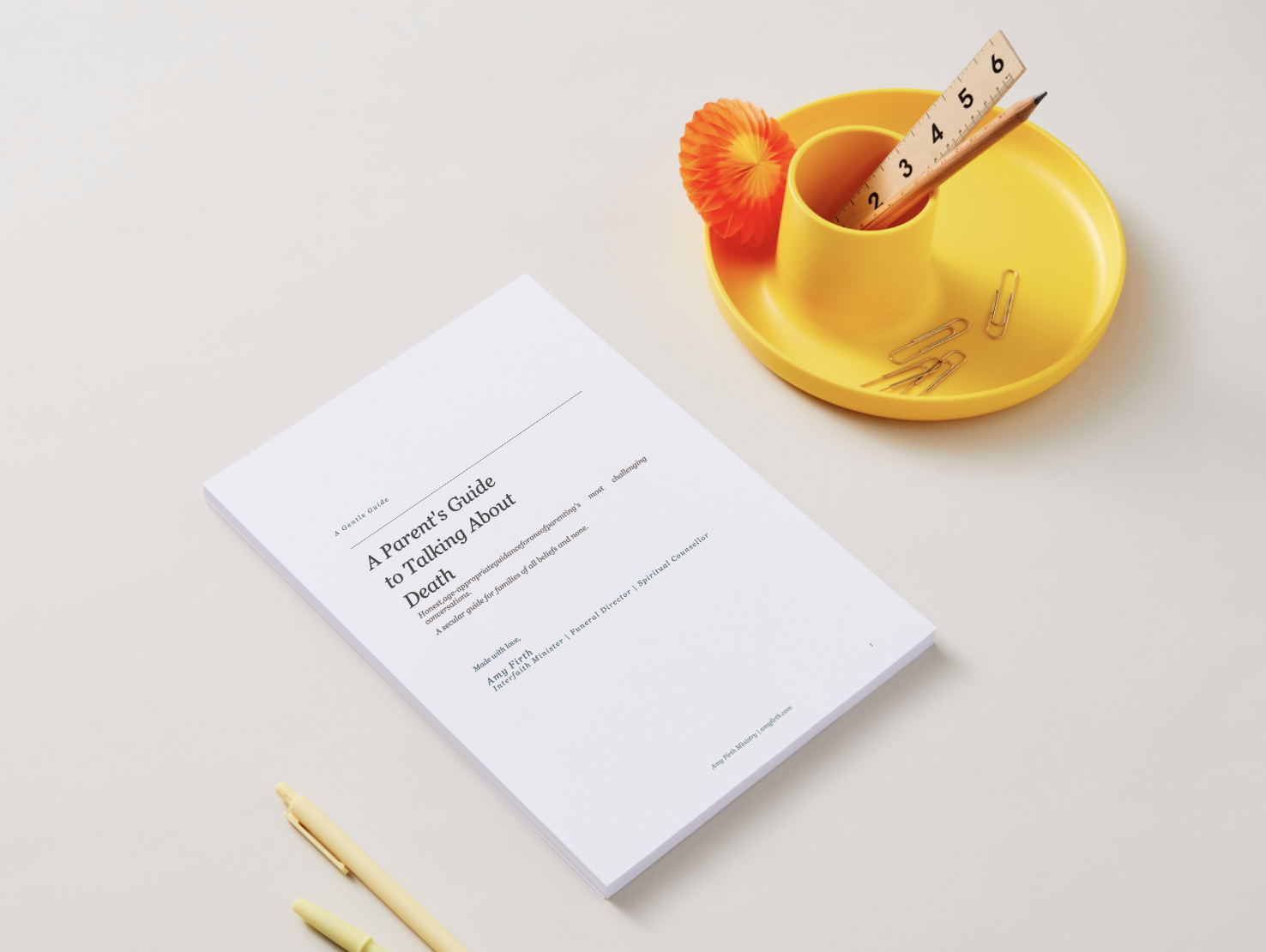
A gentle, honest guide for one of parenting's most challenging conversations.
There's no perfect script. There's no right age. There's only the truth, told slowly, with love. This guide gives you the language, the examples and the gentle scaffolding to have these conversations when they're needed.
This guide is free, and will always be. If it helps you, the kindest thing you can do is forward it to one other parent or carer who might need it. These conversations spread one family at a time.
Take the guide. Read it slowly.
You can download it now. It will land in your inbox within a few minutes, alongside a short note from me. There's no rush to read it all at once. Most people skim it the first time, then return to specific sections when the moment calls for it.
For when the words feel hard
Most parents and carers don't go looking for a resource like this unless they're already standing close to something difficult. Maybe a grandparent is unwell. Maybe a beloved pet is fading. Maybe a friend has just lost someone, and your child is asking questions you weren't quite ready for.
Whatever brought you here, you're in good company. Almost everyone feels unprepared for these conversations. Most of us didn't grow up watching the adults around us speak openly about death, so we don't have a model to draw on. The instinct is usually to soften the truth, change the subject, or wait for a better moment that never quite comes.
This guide offers another way. Not perfect answers, but grounding language, gentle reassurance and helpful examples for the conversations that matter most.
What you'll find inside
The guide is twelve pages, designed to be read slowly and kept somewhere you can return to. Inside, you'll find a short opening note about why honesty serves children better than silence.
Specific language that helps and language to avoid, with the reasoning behind each. Gentle scripts for when a death is anticipated, including how to talk about what your child might notice as someone is actively dying. Different language for when a death has already happened, including for sudden or unexpected loss. An age guide that meets children where they are, from under five through to twelve. A final reflection on why these conversations matter so much, and a closing note on caring for yourself while you're caring for them.
It's secular, gentle and written for families of all beliefs and none.
A note from me
In case we haven’t crossed paths much before, I’m Amy - I'm an interfaith minister, funeral director and celebrant, and I've spent more than a decade accompanying the dying and supporting bereaved families through some of the most tender moments of their lives.
I'm also a mother. I wrote this guide because the conversations I have with my own daughter about death are the same ones I'm asked about by clients, friends and people on the internet, again and again. The instinct to protect children from grief is universal. So is the realisation, somewhere along the way, that silence creates more confusion than the truth ever does.
This guide is what I'd want to put into the hands of every parent and carer I meet.
You might also find these helpful…


As a funeral director, I’ve come to understand that there are moments in grief that catch us off guard. One of those moments is when I knock on your door holding the ashes of your loved one. This quiet exchange is often more emotional than people expect. This gentle guide offers 3 simple ways to allow this moment to feel supported.